

Order Inaccuracy: A Commercial Failure, not a Supply Chain One
📉 𝗪𝗵𝗲𝗻 𝗧𝗵𝗲 𝗪𝗿𝗼𝗻𝗴 𝗢𝗿𝗱𝗲𝗿 𝗟𝗲𝗮𝘃𝗲𝘀 𝗧𝗵𝗲 𝗗𝗼𝗰𝗸: 𝗪𝗵𝘆 𝗢𝗿𝗱𝗲𝗿 𝗜𝗻𝗮𝗰𝗰𝘂𝗿𝗮𝗰𝘆 𝗜𝘀 𝗔 𝗖𝗼𝗺𝗺𝗲𝗿𝗰𝗶𝗮𝗹 𝗙𝗮𝗶𝗹𝘂𝗿𝗲, 𝗡𝗼𝘁 𝗔 𝗦𝘂𝗽𝗽𝗹𝘆 𝗖𝗵𝗮𝗶𝗻 𝗢𝗻𝗲!
𝗣𝗮𝗿𝘁 𝟭 𝗼𝗳 𝗮 𝟯-𝗽𝗮𝗿𝘁 𝘀𝗲𝗿𝗶𝗲𝘀 — 𝗗𝗲𝗰𝗼𝗺𝗽𝗼𝘀𝗶𝗻𝗴 𝗖𝘂𝘀𝘁𝗼𝗺𝗲𝗿 𝗦𝗲𝗿𝘃𝗶𝗰𝗲 𝗙𝗮𝗶𝗹𝘂𝗿𝗲
Every executive team on hearing the phrase “service failure,” reaches for the same instincts: check the forecast, check the warehouse, blame the plant. 🏭
But a significant share of missed orders – in some businesses, 30 to 40 percent – never had anything to do with inventory, planning, or logistics. The failure happened before a single pallet moved.
We call this domain Order Inaccuracy. It is a commercial and master-data discipline problem wearing a supply chain uniform.
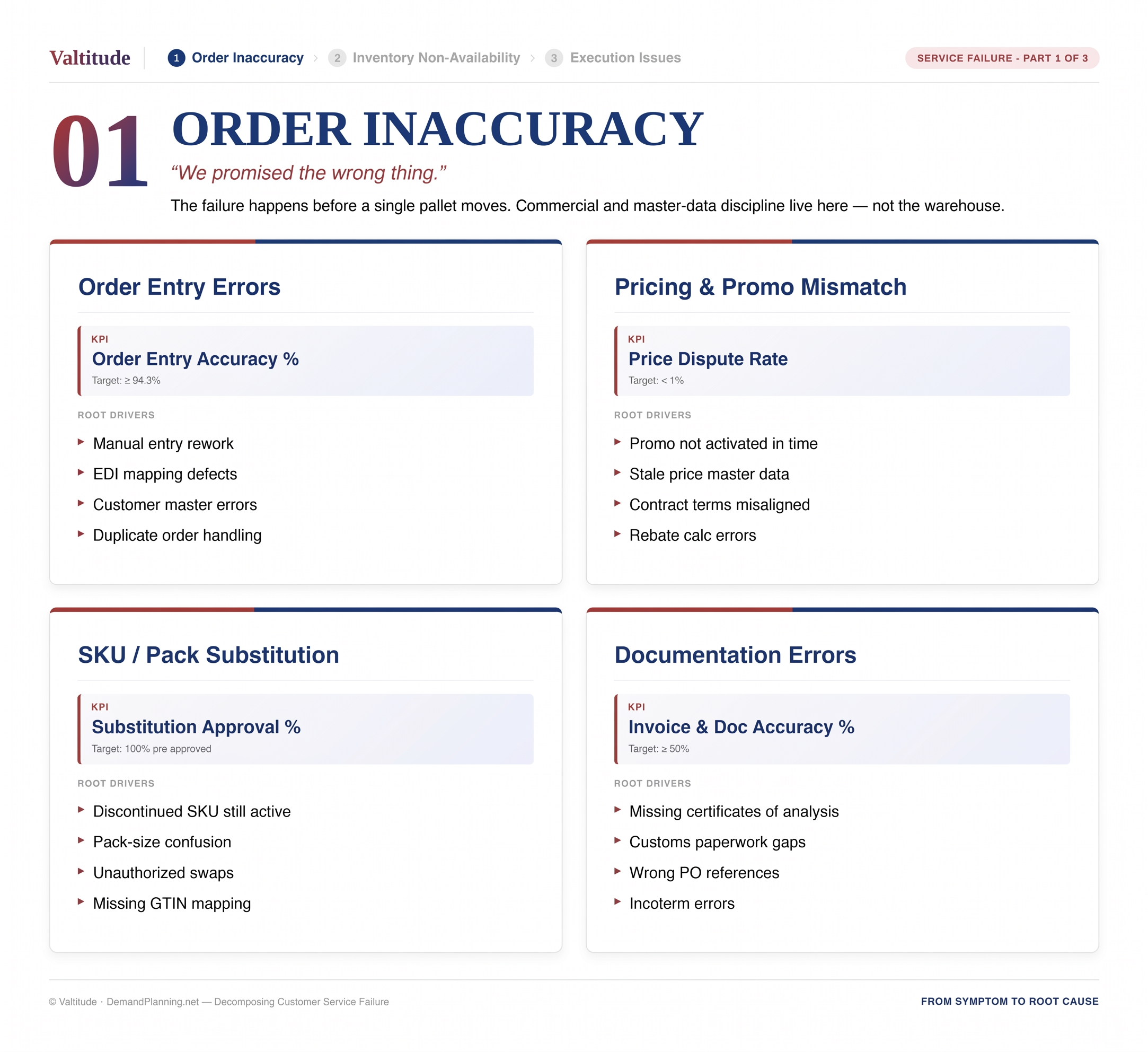
The chart below decomposes Order Inaccuracy into four measurable failure modes. Each has an owner, a KPI, and a target.
𝟭. 𝗢𝗿𝗱𝗲𝗿 𝗘𝗻𝘁𝗿𝘆 𝗘𝗿𝗿𝗼𝗿𝘀 𝗞𝗣𝗜: Order Entry Accuracy % · Target ≥ 99.5%
The order arrives correctly and gets typed in wrong. Or the EDI mapping silently drops a line item. Or a stale customer master routes the shipment to a decommissioned DC. These failures rarely make the executive report – What they actually are is uncontrolled variance at the front door.
𝟮. 𝗣𝗿𝗶𝗰𝗶𝗻𝗴 & 𝗣𝗿𝗼𝗺𝗼 𝗠𝗶𝘀𝗺𝗮𝘁𝗰𝗵 𝗞𝗣𝗜: Price Dispute Rate · Target < 1%
The order ships perfectly. The invoice is wrong. Promo not activated. Contract terms out of sync. Rebate math off. The customer withholds payment; the finance team fights the customer. This one costs the most.
𝟯. 𝗦𝗞𝗨 / 𝗣𝗮𝗰𝗸 𝗦𝘂𝗯𝘀𝘁𝗶𝘁𝘂𝘁𝗶𝗼𝗻 𝗞𝗣𝗜: Substitution Approval % · Target 100% pre-approved
A discontinued SKU stays active in the ordering system. A pack-size gets swapped on the fly. A customer service rep authorizes a substitute without approval. Every one of these is a compliance failure the customer feels.
𝟰. 𝗗𝗼𝗰𝘂𝗺𝗲𝗻𝘁𝗮𝘁𝗶𝗼𝗻 𝗘𝗿𝗿𝗼𝗿𝘀: Invoice & Doc Accuracy % Target ≥ 99%
Missing certificates of analysis. Wrong incoterm on the export document. PO reference mistyped on the invoice. The product is on the truck; the paperwork isn’t. In cross-border and regulated CPG businesses, this single failure mode can hold seven-figure shipments at the port for days.
Read our related posts: